Connection
Curiosity
Confidence
At the heart of our curriculum is a simple belief: when young people feel safe and connected, something begins to shift. Curiosity returns. Confidence grows. Learning starts to feel possible and joyful again.
Our Curriculum
-
Once the foundations of connection, curiosity, and confidence have been established, we take a flexible and responsive approach to learning. Every learner arrives with different strengths, needs, interests, and aspirations, so no two programmes are exactly the same.
Rather than relying solely on fixed, linear pathways, we work with young people, families, schools, and professionals to create personalised learning experiences that build confidence, develop skills, and keep future opportunities open.
-
Curiosity provides a powerful starting point for learning. We look for opportunities to build on a young person's existing interests and use them as gateways into wider knowledge and skills.
A fascination with Pokémon might lead to reading, writing, statistics, classification, or strategy. An interest in trains could open up opportunities to explore engineering, geography, history, timetables, and mathematical problem-solving. By starting with what matters to the learner, we can create meaningful connections that increase engagement and confidence.
Alongside individual interests, we create opportunities for learning through projects, investigations, outdoor experiences, enterprise activities, and real-world challenges.
Across all areas of learning, our aim is to make knowledge purposeful, relevant, and connected to the wider world.
-
While child-led learning sits at the heart of what we do, we remain mindful of keeping future pathways open. For some young people, this may include reintegration into school settings; for others, it may involve working towards formal qualifications or alternative long-term destinations.
Our provision is therefore grounded in the National Curriculum, ensuring that flexibility and creativity sit alongside academic rigour and future opportunity.
-
Description text goes hereThere is no single pathway to success. We therefore take a flexible approach to assessment and accreditation, ensuring that each learner can work towards outcomes that are meaningful, recognised, and appropriate for their future goals.
Some young people may work towards formal qualifications such as GCSEs or Functional Skills, while others may benefit from alternative accreditation, portfolio-based evidence, or personalised targets that reflect their individual journey.
Our aim is to ensure that every learner has opportunities to demonstrate their knowledge, skills, and achievements in ways that are meaningful, recognised, and supportive of their future aspirations.
-
Education is about more than academic achievement. We aim to help young people develop the knowledge, skills, and confidence they need to navigate everyday life, build positive relationships, and move towards greater independence.
Depending on age and need, this may include opportunities to develop communication skills, self-advocacy, decision-making, emotional regulation, budgeting, travel training, work-related skills, and participation in the wider community. Our goal is to help every young person feel prepared for whatever comes next.
-
We recognise that growth and development extend beyond academic learning. Alongside academic outcomes, we track progress across four key areas: emotional regulation; social interactions and relationships; engagement and learning behaviours; and safety, independence, and confidence.
Together, these areas help us understand each young person's strengths, celebrate their achievements, and identify meaningful next steps in their learning and development.
Delivery
-
The majority of our core learning is delivered by subject specialist teachers in a 1:1 setting, either at our premises in Effingham, or in the young person’s home. It is highly personalised around the needs of the individual learner, and seeks to follow their interests and ideas.
-
At KS1, KS2 and KS3, foundation subjects are primarily taught in small-group settings of 2–6 learners.
Programmes are designed to inspire curiosity and engagement, often drawing on students’ interests and linking learning to meaningful, real-world application of skills being developed across the wider curriculum.
At KS4, specialist subject teachers are available across a broad range of subjects for one-to-one teaching, while opportunities for shared learning and collaboration are incorporated wherever appropriate.
-
We believe that creativity, curiosity, and joy are essential parts of learning - not extras to be added once a child is coping, but powerful routes back into confidence, connection, and engagement.
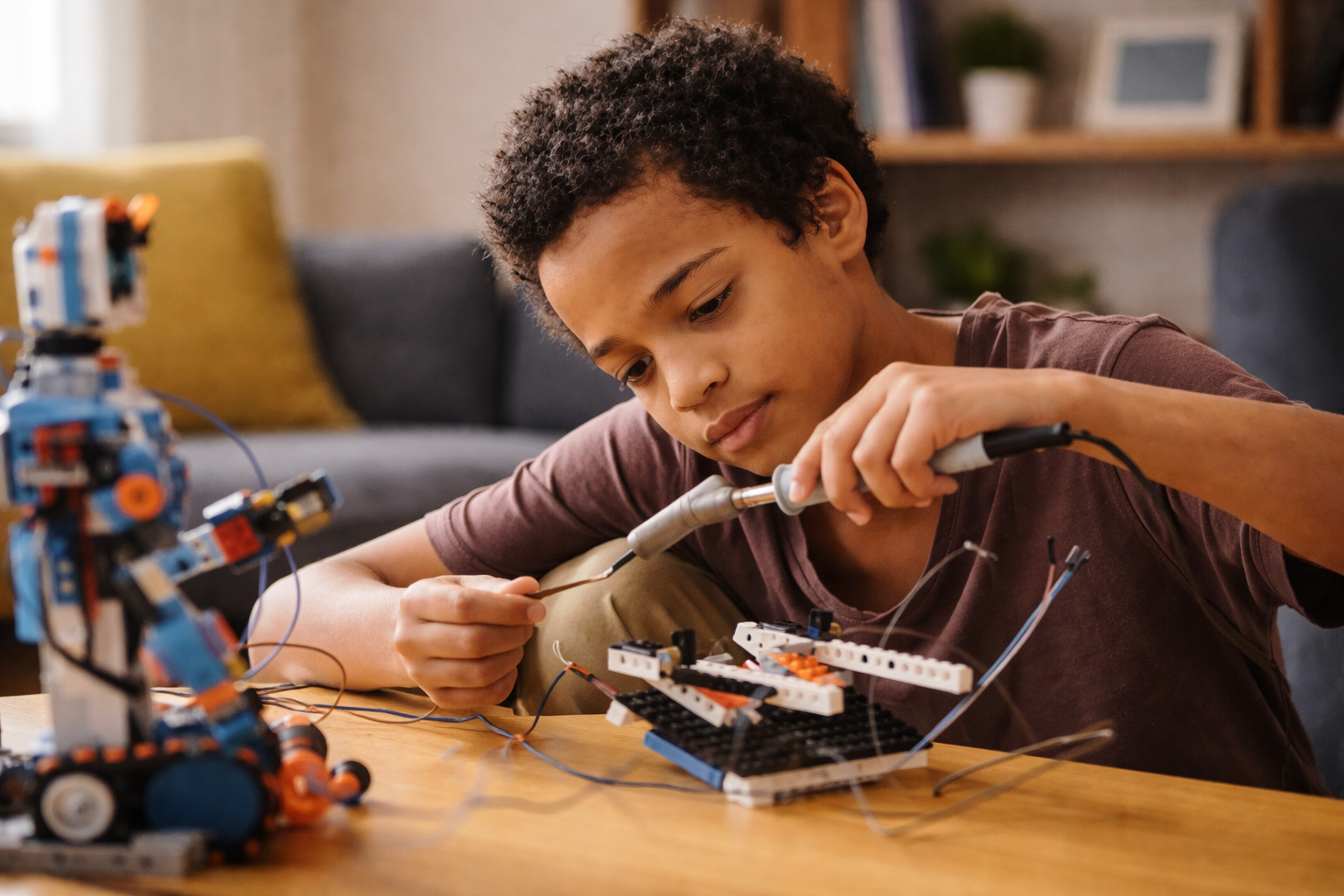
Creativity and enrichment therefore form an important part of the learning experience at The Space Between. Alongside academic learning, young people are encouraged to explore interests, discover new hobbies, and develop confidence through meaningful, hands-on experiences.
Programmes may include creative arts, cooking, outdoor learning, gaming and strategy activities, construction projects, storytelling, technology, sport, and community-based experiences.
Sessions are designed to support communication, teamwork, problem solving, resilience, and self-esteem, while providing opportunities for young people to experience success, connection, and enjoyment in a safe and supportive environment.
-
All children who learn with us have regular opportunities to engage in formal and in informal outdoor learning.
Whether this is simply taking our books outside; making use of the beautiful recreational facilities at our site for play and exploration; engaging in gardening activities to grow our own produce; or taking lessons with our fully qualified Forest School practitioner, all children have the opportunity to connect regularly and meaningfully with the outdoor world around them.

Learn more…